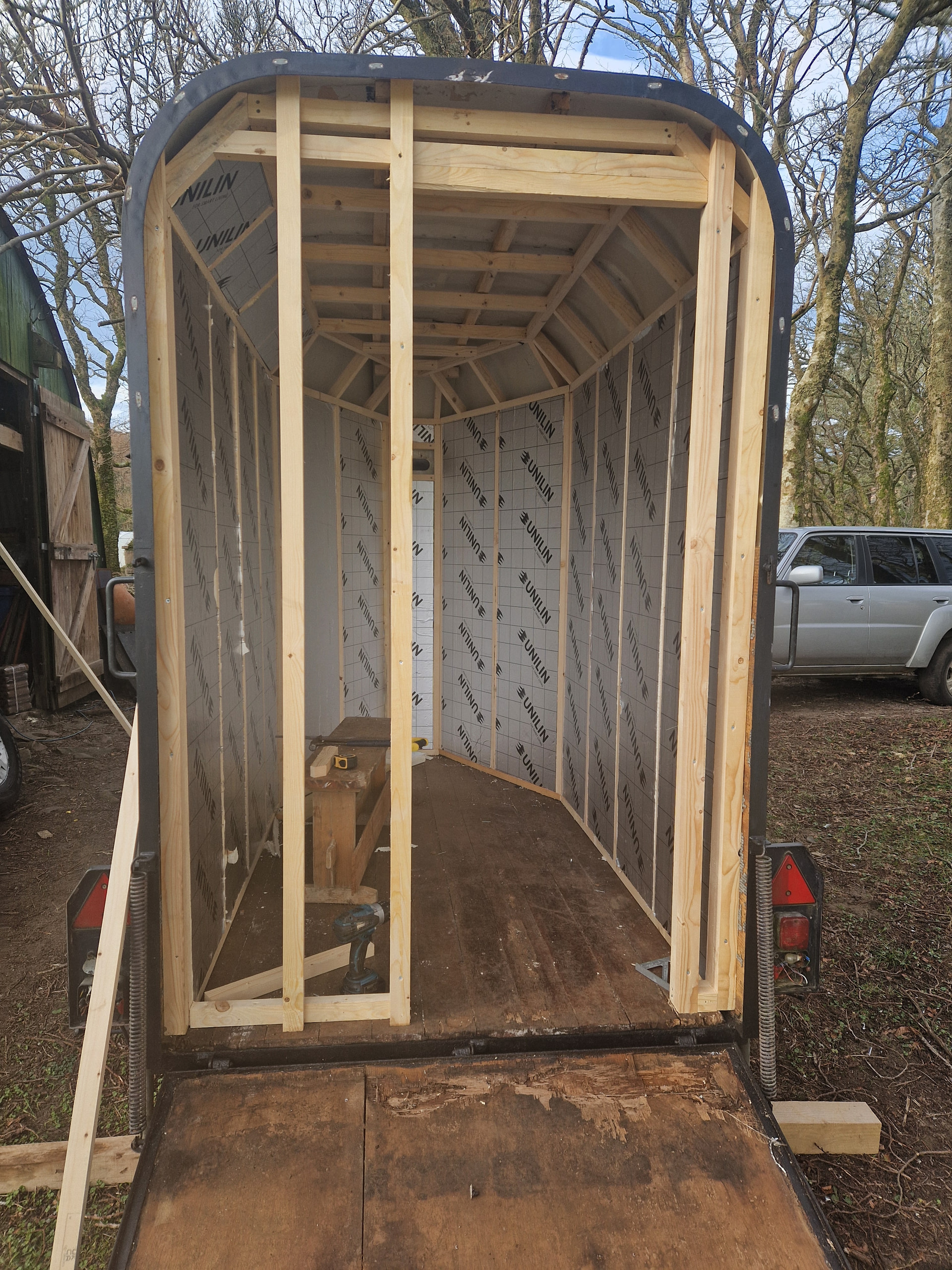
Hello there, like plenty of others I’m converting an old horsebox into a Sauna here on the Isle of Rum.
I’ve done some research and watched lots of youtube vids and have Lassi’s book on the way but any general advice or lessons learned from your own projects would be really helpful and specifically I was wondering about flooring. My horsebox has a solid wooden floor which i thought I’d leave in, the plan was to insulate next and then put a waterproof layer in ( i saw one video where a guy puts waterproof boards and skirting in to make a sealed waterproof base) and then put final wooden boards on top. Does that sound about right?
Drainage - Does it need much? would raising the jockey wheel to create a slight incline be sufficient?
Welcome to the forum @Fliss and thank you for posting your question on here! Apologies for the silence - we’re just getting things up and running and I will work on trying to find someone who could advise on this for you.
Great to hear you are converting a horsebox into a sauna and that you have ordered Lassi’s book, that is an amazing place to start
Flooring:
In terms of flooring in a horsebox the first thing to do is review the quality of the existing floor above and below to see if it’s got some life left in it. Then we have done a few different methods:
Open plank flooring - remove old horsebox floor and replace with untreated decking boards, siberian larch or similar leaving a small gap for drainage & air flow - this might not be appropriate for an exposed site on Rum though as in very windy conditions can cause a lot of updraft
Lino - either level existing floor or build sub floor with marine plywood top and cover with a suitable lino (we use altro aquarius) - need to be careful on choosing a product which is suitable for use in saunas. We run a 150mm upstand around the edge to ‘tank’ the floor which is great in commercial use
Phenolic plywood - highly durable and designed for harsh environments (like a sauna). We tend to remove the trailer floor and replace with phenolic boards
We tend not to insulate the floor but instead choose to add duckboards for a nicer surface to walk on
Drainage:
If you are building a wood fired sauna the floor drain can double up as an inlet vent for the wood fired heater - a simple gully with a grill can provide this
In real terms we tend to do either exactly what you have said and raise the jockey wheel if there is excess water or more often than not a mop (and bake) at the end of the shift is sufficient - it depends on how the sauna will be used and how close it is to the cold plunge. By bake I mean bake the sauna dry at the end of the session, essentially throwing on a few logs after the last person has left the sauna and open up the vent
Hope this helps
Here is our rough step by step process for building a horsebox sauna:
Floor
Frame
Insulation
External membrane (front wall only)
Vapour barrier
Batten
Internal cladding
Stove surround (base and heat shields)
Stove (bolted to base and through floor)
Flue
Benches
Door
External cladding (T&G)
Vents / drains / hooks
Clean / paraffin oil
The main things are all stainless steel fixings and untreated timber inside the vapour barrier, getting the safety distances / stove install right and not using anything that can off gas (i.e the wrong type of insulation / sealants / vinyl).
Thanks Tom, that is really helpful. Currently got it framed up and insulated - with 50mm insulation sheets. It has a solid wooden floor and I don’t see any point in ripping that up, so will just floor on top of it and not bother insulating it, the phenolioc ply looks good. The cold plunge will be the sea, for most people anyway. What type of sealants/insulation give off bad vapours - the insulation is standard, there’s some sikaflex in there and I was going to get expanding foam for the gaps behind the insulation ?